If you’ve been wanting to learn how to make homemade sauerkraut, you’re in luck! We’re going to show you how to make this probiotic superfood in just a few minutes. That’s right, you’ll need just 5-10 minutes to whip up homemade sauerkraut. The real magic happens on its own over the course of a few days (or months!) with natural fermentation.
If you’ve been wanting to learn how to make homemade sauerkraut, you’re in luck! We’re going to show you how to make this probiotic superfood in just a few minutes. That’s right, you’ll need just 5-10 minutes to whip up homemade sauerkraut. The real magic happens on its own over the course of a few days (or months!) with natural fermentation.
Ingredients
Yield: 12-16 servings
Please login to view the ingredients for this recipe
Directions
Step 1
Cut the cabbage into thin shreds and place into a large bowl. Sprinkle with salt and massage for several minutes with both hands until the cabbage begins to soften and release juice. The cabbage will reduce greatly in size after a good massage. Allow to sit for a few minutes to release more juice.
Step 2
Stuff cabbage into a 1 qt mason jar. Use a fermentation weight to press down firmly on the cabbage to pack it down. It’s very important that the cabbage be compact and pressed tightly into the jar. You should be able to fit the entire head of cabbage into a one 4-cup mason jar.
Step 3
Pour remaining brine overtop and press weight into cabbage so that brine rises above the weight. All cabbage should be underneath the weight and brine. Close the jar. If using an airtight jar, be sure to burp it daily or twice daily to release the gas. If you don’t burp the jar, the jar will likely explode due to the pressure from the gas building up. After a few days, this won’t be necessary, it’s just the first few days.
Step 4
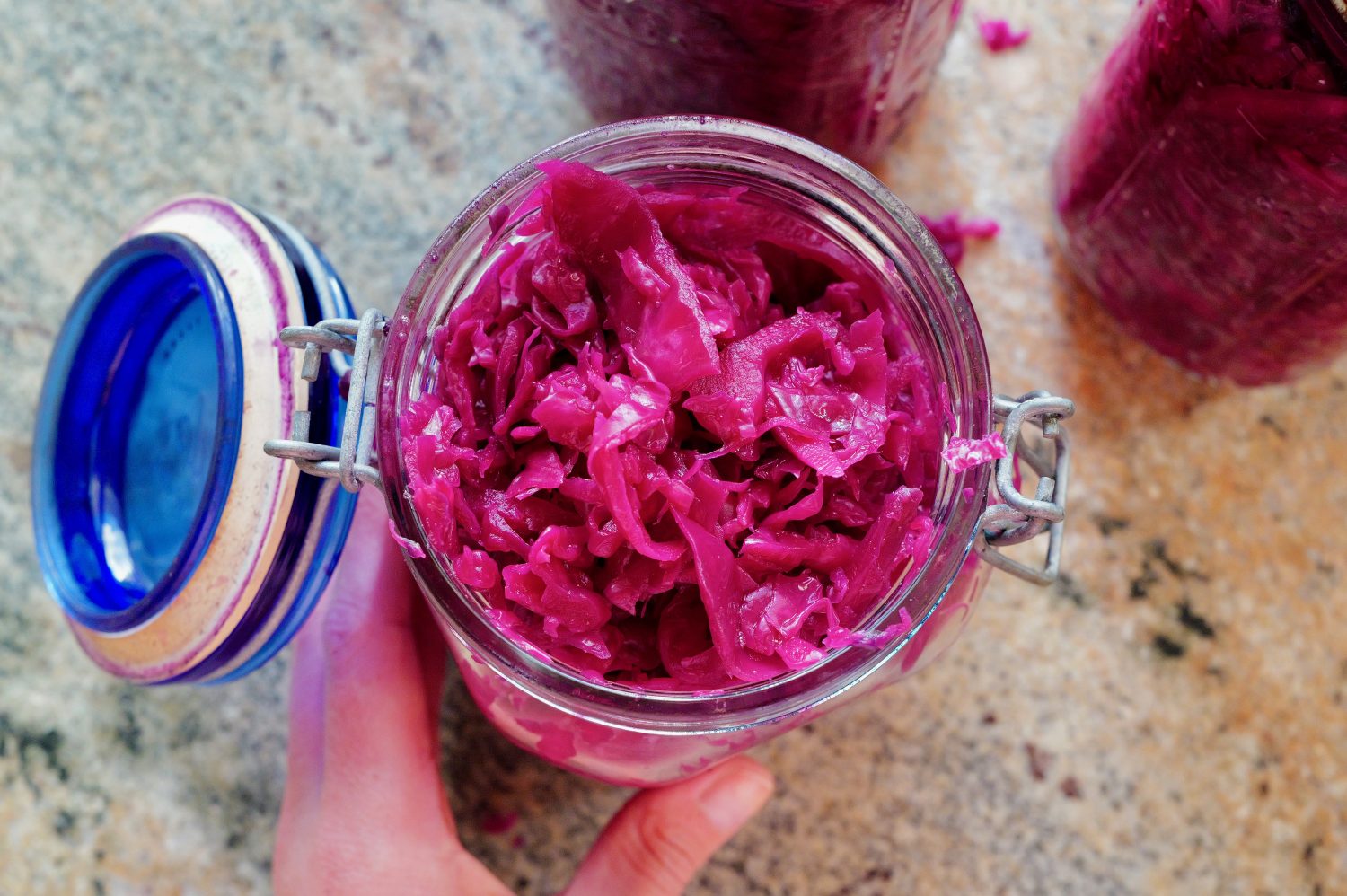
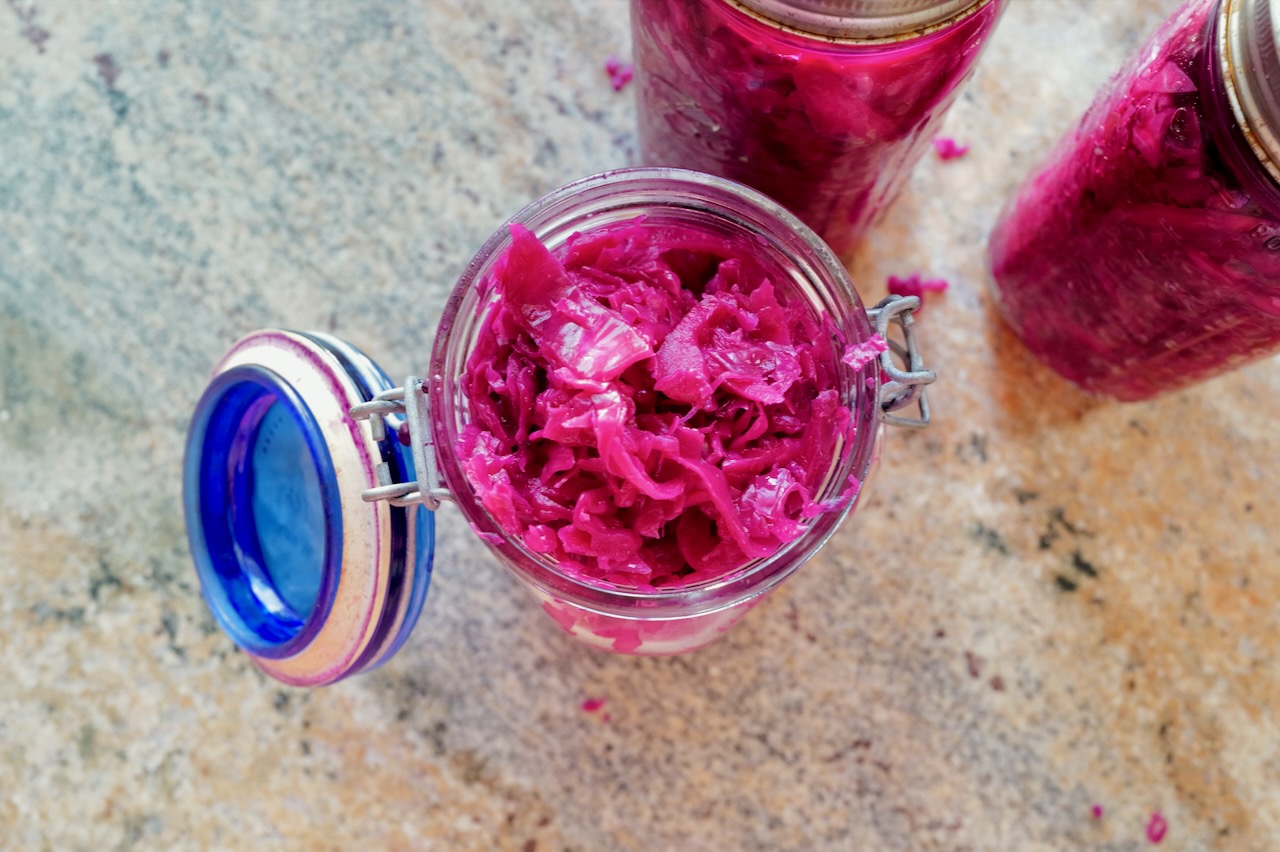
Allow to sit on the counter at room temperature for 3-5 days or longer to ferment. You may notice that brine oozes out during the first few days. Just clean this up and allow to continue to ferment. After a few days, the sauerkraut is ready.
Fermenting Tip
The longer the sauerkraut sits at room temperature, the more it will ferment. It will continue to soften more and even change flavors and color. Be sure to test out how you like your kraut by tasting along the way. After opening the jar and beginning to eat, transfer to the fridge. Once the kraut is fermented to your liking, transfer to the fridge for cold storage.
How Long Will It Last?
The fermentation naturally preserves the sauerkraut to have a very long shelf-life. I’ve never had one go bad on me! That being said, if it doesn’t taste right after a period of time, just chuck it and start again 🙂
Health Tip
Eat one spoonful a day for a boost of probiotics and to support a healthy gut microbiome.



















Notes
Read our recipe notes below (0)